

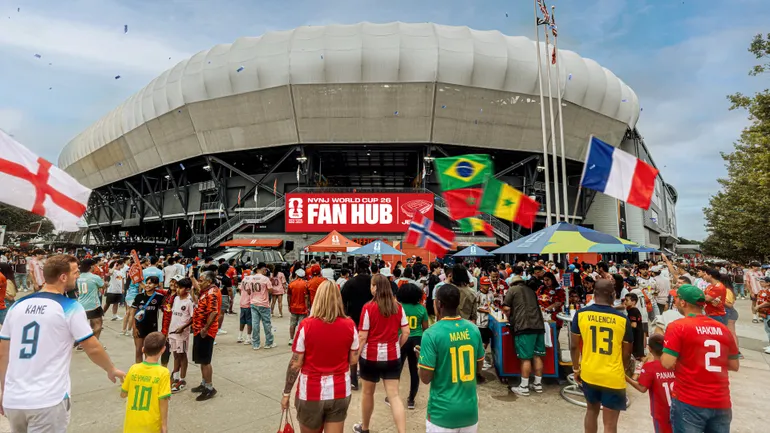
World Cup Advertising Highlights Global Digital Growth
The World Cup advertising trends from 2025 to 2026 offer a revealing look at how brands are adapting to a diversifying sports marketplace. According to new research from Sensor Tower, sports brands collectively spent $3.3 billion on digital ads across more than 50 markets and 18 channels during this period—a significant 26% year-over-year increase. This surge underscores the growing importance of digital advertising in reaching worldwide audiences, especially during marquee sporting events like the World Cup.
Diversification Across Digital Platforms
Brands are increasingly broadening their advertising strategies, shifting focus towards online and mobile channels. The report found that spending on platforms such as YouTube, TikTok, Instagram, and Facebook grew by 25% year-over-year in the second quarter of 2026. Even more impressive was the 116% jump in mobile app advertising spend, signaling the ascendancy of mobile platforms as critical touchpoints for engagement.
Gaming, entertainment, and wagering advertisers also played a significant role, investing over half a billion dollars in linear TV from Q3 2025 to Q2 2026—a modest 2.3% increase compared to previous years. However, the overall trend is clear: digital channels are capturing a larger share of advertising budgets, as evidenced by the 11.2% year-over-year uptick in ad impressions, which indicates that brands are prioritizing premium, high-visibility inventory.
Impact of World Cup Advertising Trends on Industry Sectors
Sensor Tower’s analysis of World Cup advertising trends highlights how different industries leverage major sporting events to maximize exposure. CPG (consumer packaged goods) brands, in particular, dominated the World Cup advertising landscape, capturing 37% of ad impressions in the 90 days leading up to the final match. This figure was notably higher than in other major sporting events, such as the Super Bowl (12%), NBA (not specified), March Madness (14%), and MLB.
March Madness offered a more balanced advertiser mix, with food and dining at 16% of ad impressions, CPG at 14%, and financial services at 11%. In contrast, the NBA season saw the highest concentration of sports book advertisers, accounting for 26% of ad impressions, compared to 13% for the Super Bowl and 15% for the MLB season.
Expanding Media Mix and Global Reach
The World Cup advertising trends also reveal how brands not officially sponsoring the tournament sought to capitalize on its unrivaled global reach. The final match between Spain and Argentina was anticipated to draw a worldwide audience in the billions, prompting diverse industries to intensify their marketing efforts. While CPG brands led the pack in terms of ad share, there was a healthy mix of other advertiser categories during the tournament. Media and entertainment accounted for 20% of ad impressions, though this was the lowest share for the segment across the five major sporting events analyzed.
The NBA proved to be the most attractive event for media and entertainment advertisers, garnering 59% of ad impressions, followed by the Super Bowl (46%), MLB (40%), and March Madness (39%). Shopping brands captured 14% of World Cup ad impressions, while food and dining services and financial services each secured 5%.
Online Betting and Media Spend Patterns
Despite dramatic increases in digital ad spend from prediction markets Kalshi and Polymarket—104% and 286% month-over-month during the tournament, respectively—online betting represented only 2% of total ad impressions for the World Cup. This suggests that while new entrants are rapidly boosting their investment, their share of the overall advertising landscape remains limited.
Notably, Fox was the sole major broadcaster to increase its advertising spend during the June FIFA World Cup window, highlighting a selective but strategic approach among traditional media players to capitalize on peak sports viewership periods.
Conclusion: The Future of World Cup Advertising Trends
The evolving World Cup advertising trends reflect a marketing landscape that is increasingly digital, diversified, and global in scope. As brands continue to invest more in online and mobile channels, the competition for attention during premier sporting events is intensifying. For marketers aiming to maximize their return on investment, understanding these trends and the unique audience mixes of each event will be essential for future campaigns.
This article is inspired by content from Original Source. It has been rephrased for originality. Images are credited to the original source.