

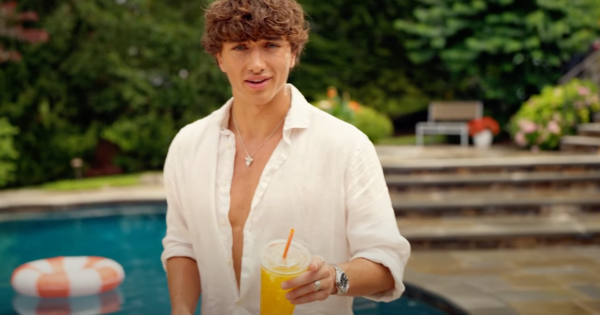
Dunkin’ Faces Social Media Backlash Over New Ad
Dunkin’ is under fire after the recent release of a commercial promoting its Golden Hour Refresher, starring The Summer I Turned Pretty actor Gavin Casalegno. The ad highlights the actor’s glowing tan with a reference to genetics, a move that has stirred conversation and backlash across major social media platforms.
The timing of Dunkin’s ad has only fueled the controversy. It was released shortly after American Eagle’s campaign featuring actress Sydney Sweeney, which itself drew criticism for its overt reference to genetics and perceived racial overtones. While Dunkin’s ad is more subtle in its approach, it still touches on themes that many viewers find problematic, especially in the current cultural climate.
Genetics Reference Sparks Debate
In the commercial, Casalegno confidently states, “This tan? Genetics. I just got my color analysis back and guess what? Golden summer.” The statement, though brief, has led to accusations that the ad glorifies physical traits traditionally associated with white beauty standards.
Color analysis, a popular trend in the beauty world, involves identifying which colors best suit a person’s skin tone. While the concept is widely accepted in fashion and makeup, connecting it to genetics in a commercial setting has proven controversial. Critics argue that such messaging perpetuates exclusivity and may alienate audiences who do not fit conventional beauty ideals.
Social Media Reactions Highlight Consumer Sensitivities
The ad has sparked significant engagement on platforms like TikTok, Instagram, and YouTube. Dunkin’s TikTok post of the ad has garnered over 1.3 million views, with many users leaving critical comments. One popular comment reads, “What’s up with ads and the word genetics rn,” earning over 25,000 likes. Another user simply wrote, “So no American Eagle or Dunkin’, got it,” receiving nearly 2,000 likes.
Users on TikTok have also created their own videos in response to the ad. One content creator highlighted the oddity of Dunkin’ referencing genetics without any relevant pun or context, unlike American Eagle’s wordplay on “jeans” and “genes.” That video alone has surpassed 36,000 views, indicating how deeply the topic has resonated, or unsettled, audiences.
Comparison to American Eagle’s Campaign
The Dunkin’ controversy follows closely on the heels of American Eagle’s campaign featuring Sydney Sweeney. In that ad, Sweeney—who has blonde hair and blue eyes—states, “Genes are passed down from parents to offspring, often determining traits like hair color, personality, and even eye color.” The campaign has received criticism for appearing to promote eugenics and reinforcing outdated beauty standards.
Critics argue that both campaigns, whether intentionally or not, seem to celebrate Eurocentric features under the guise of genetic discussion. The backlash highlights a growing consumer awareness and sensitivity around the implications of such messaging in advertising.
Timing and Cultural Context
Many social commentators believe that the backlash against Dunkin’ may be less about the ad’s content and more about its timing. Coming in the wake of American Eagle’s controversial campaign, consumers were already on high alert for potentially problematic messaging. The proximity of the two ads has made it difficult for Dunkin’ to escape scrutiny.
Still, the brand’s decision to include a reference to genetics—however subtle—has not gone unnoticed. In today’s social media-driven landscape, even minor missteps can lead to widespread public discourse and reputational challenges.
Dunkin’ Remains Silent
As of now, Dunkin’ has not issued an official response to the backlash. ADWEEK reached out for comment but did not receive a reply. The absence of a statement has left many wondering whether the brand will address the controversy or allow it to fade from public attention.
Meanwhile, the conversation around the ad continues, with users dissecting every detail and drawing broader conclusions about representation, inclusion, and the role of genetics in public discourse.
Advertising in the Age of Accountability
The backlash facing Dunkin’ and American Eagle underscores the evolving landscape of advertising. Brands must now navigate a complex balance between creativity and cultural sensitivity. Audiences are more attuned than ever to the implications behind marketing messages, especially those that touch on identity, race, and appearance.
As consumers continue to demand accountability and inclusivity, advertisers must be more mindful of the language and imagery they use. The reactions to these recent campaigns serve as a cautionary tale for companies looking to connect with younger, more socially conscious demographics.
This article is inspired by content from Original Source. It has been rephrased for originality. Images are credited to the original source.