

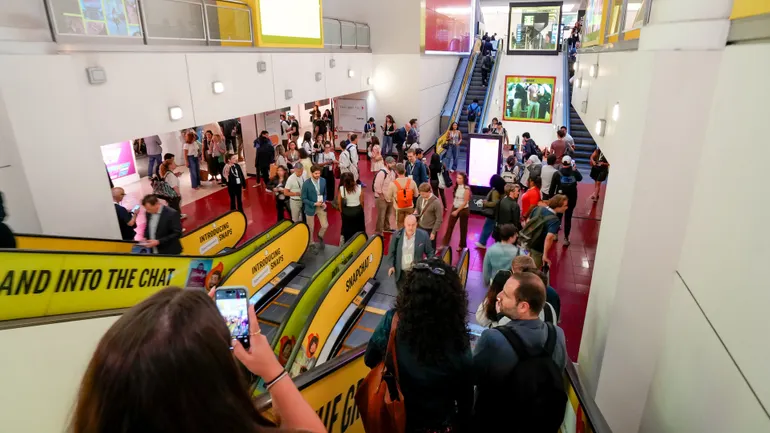
Advertising Week 2025: A Hub of Innovation and Insights
The bustling Penn District in Midtown Manhattan once again played host to the latest edition of Advertising Week New York earlier this month. The event drew top minds from across the marketing and advertising industries, including influential leaders from PepsiCo, Kraft Heinz, Molson Coors, and more. With a packed agenda featuring panels, workshops, and networking events, the four-day conference spotlighted the industry’s most pressing trends and challenges.
Artificial intelligence, cultural relevance, and inclusive marketing were among the dominant themes discussed throughout the event. Marketing Dive reporters were on the ground, providing exclusive coverage and moderating key sessions, capturing the pulse of the evolving marketing landscape.
Culture-Led Marketing Takes Center Stage
One of the most compelling discussions came from Kraft Heinz CMO Todd Kaplan, who emphasized the importance of brand building through a lens of cultural agility. Kaplan likened the process to pointillism, where small, thoughtful actions build a complete and resonant image over time. He cautioned marketers against chasing every viral trend, urging a more strategic approach that protects long-term brand equity.
Executives from Molson Coors and PepsiCo echoed this viewpoint, advocating for seamless collaboration with agency partners to deliver timely and relevant cultural content. By removing execution barriers and fostering mutual alignment, these brands are able to move at the speed of culture while maintaining consistency in messaging.
AI’s Expanding Role in Marketing Strategy
Artificial intelligence emerged as a recurring topic, especially in relation to search marketing, content creation, and data analysis. Greg Johns of Canvas Worldwide discussed the evolution from keyword-based search to AI-driven, prompt-based search, which is opening up new frontiers for brand engagement.
Meanwhile, Colgate-Palmolive’s Hello brand shared how it uses AI to refine marketing strategies, emphasizing the importance of “gut-checking” AI-generated insights with human intuition. The balance between automation and creativity remains a hot topic as marketers continue to explore AI’s potential.
Standing Firm on Brand Values
In a panel addressing brand integrity, executives from various companies reinforced the need to uphold core values—even in the face of potential backlash. Jessica Hammers of Marketing Dive reported that leaders view value-driven branding as a key driver of customer loyalty and long-term trust.
Brands like e.l.f. and MAC demonstrated how inclusivity can be embedded across an organization, not just within DEI initiatives. Full organizational buy-in, they argued, is essential to creating authentic and impactful campaigns that resonate with diverse audiences.
The Rise of Creator Agencies and Co-Sourcing Models
The growing importance of creator-focused agencies was another key discussion point. Executives from Unilever, Gap, and Marriott revealed that brands are increasingly seeking agency partners who can deliver both performance and strategic vision. As influencer marketing matures, expectations for creator agencies are becoming more sophisticated.
In a related shift, PepsiCo and VaynerMedia showcased their “co-sourcing” model—a hybrid approach where agency teams work closely with internal marketing departments. This integration has helped PepsiCo triple its content production and drive measurable growth for brands like Mug Root Beer.
Gaming Summit Debuts as a New Frontier
This year’s Advertising Week introduced its first-ever Gaming Summit, highlighting the untapped potential of the gaming space. Despite its massive popularity among younger demographics, gaming remains underutilized in advertising budgets. Industry experts called for more proactive strategies to connect with gamers in authentic and engaging ways.
Panelists provided six actionable takeaways for marketers looking to enter the space, from understanding community dynamics to integrating non-intrusive ad formats.
Gen Z, Super Bowl Ambitions, and Retail Media
In a session focused on Gen Z marketing, several CMOs challenged the assumption that the generation is ad-averse and disloyal. Instead, they called for more nuanced strategies that prioritize authenticity and social consciousness.
Marcelo Kertesz, CMO of Manscaped, shared the brand’s aspirations to debut a Super Bowl ad, citing the opportunity to showcase its bold, humorous style on a national stage. Meanwhile, DoorDash Ads unveiled new tools designed to balance advertiser goals with user experience, signaling further growth in the retail media space.
Measuring Success in a Complex Landscape
In a session led by Keurig Dr. Pepper CMO Drew Panayiotou, panelists discussed how to gauge marketing performance in scenarios where perfect accuracy isn’t feasible. The focus was on leveraging data intelligently, embracing experimentation, and aligning metrics with broader business goals.
As the marketing ecosystem continues to evolve, the insights shared at Advertising Week New York 2025 offer a valuable roadmap for brands looking to stay ahead of the curve.
This article is inspired by content from Original Source. It has been rephrased for originality. Images are credited to the original source.