

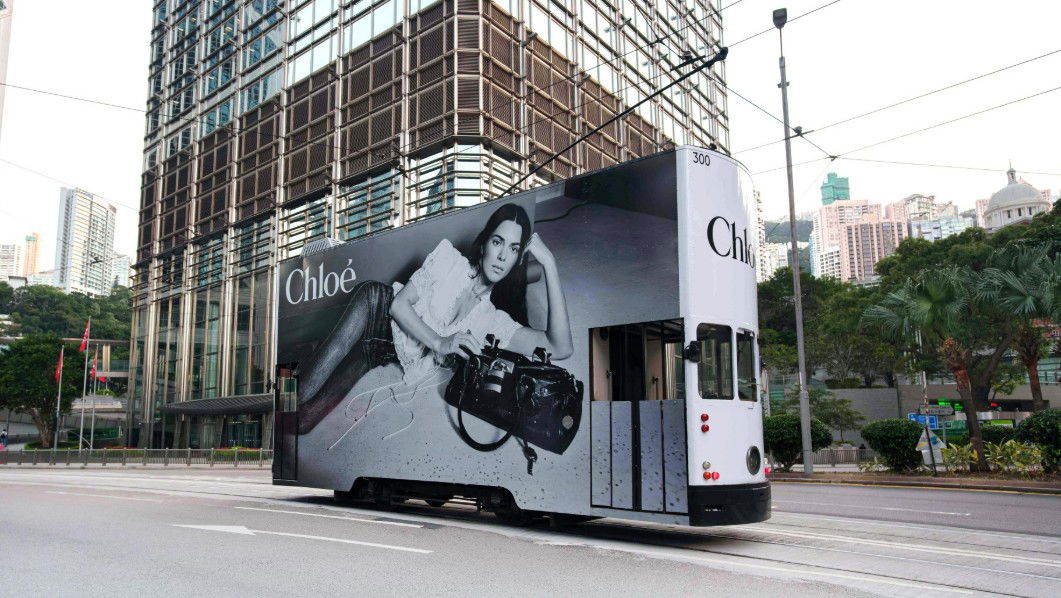
TRAM300: A New Era in Moving Billboards
If you’ve recently visited Hong Kong Island, chances are you’ve noticed the stunning visual spectacle of TRAM300, an innovative, passenger-free tram revamped into a full-scale moving billboard. Wrapped in eye-catching advertisements from luxury fashion house Chloé to real estate giant Emperor Properties, TRAM300 is redefining how brands engage with urban audiences through out-of-home (OOH) advertising.
This pioneering format marks a groundbreaking shift in how marketers approach city-wide brand exposure. Far from being just another mode of transport, TRAM300 is now a dynamic storytelling platform designed to captivate, entertain, and inform passersby in one of Asia’s most vibrant metropolitan landscapes.
Heritage Meets Innovation
Tram advertising has long held a nostalgic charm in Hong Kong, offering brands a way to reach consumers in a moving, city-wide format. However, traditional trams had to balance commuter needs with advertising space. TRAM300 changes that equation entirely by removing passengers from the mix and dedicating the entire tram to marketing, thus opening up unprecedented creative possibilities.
This innovation allows marketers to utilize every inch of the tram’s exterior, creating a larger-than-life canvas that not only draws attention but also tells immersive brand stories. The result is a mobile platform that blends the city’s cultural heritage with cutting-edge design and messaging strategies.
Pushing Creative Boundaries
Recent TRAM300 campaigns from brands like Emperor Properties and Chloé have embraced 2025 design trends such as maximalism and bold typography. These campaigns do more than sell products—they transform the tram into a moving art installation, combining aesthetics with purpose and creating a memorable urban experience.
With roughly 50% more advertising surface area compared to standard tramcars, TRAM300 offers a golden opportunity for brands to weave immersive narratives that can be seen from multiple vantage points across wider streets and bustling public areas. This increased visibility translates into amplified audience engagement and deeper brand recall.
City-Wide Brand Experiences
The mastermind behind TRAM300 is CODY out of home, a leader in urban media solutions and the exclusive advertising partner of Hong Kong Tramways and Kowloon Motor Bus (KMB). Their expertise has been pivotal in transforming this iconic mode of transport into a state-of-the-art marketing powerhouse.
“TRAM300 represents a new era in OOH advertising,” said Hilda Cheung, Marketing Director of CODY out of home. “It’s a purpose-built platform that elevates brand engagement with amplified visibility and creative freedom. It also allows brands to merge storytelling with sustainability, reaching diverse urban audiences effectively.”
According to recent research by CODY out of home, the TRAM300 campaign that ran from 11 September to 8 October delivered approximately 4.3 million impressions. The campaign resonated most strongly with key consumer demographics, particularly individuals aged 35–44 (35.36%) and 25–34 (24.28%), both highly attractive segments for marketers due to their significant purchasing power.
Beyond Ads: Urban Transformation
Brands leveraging TRAM300 aren’t just investing in another advertising medium; they are participating in a movement that transforms public spaces into engaging brand experiences. By doing so, they not only promote their products and services but also contribute to a more visually vibrant and culturally rich urban environment.
As the OOH media landscape continues to evolve, TRAM300 sets a new benchmark in mobile advertising. It offers marketers a compelling mix of reach, impact, and creative versatility—all on a moving platform that’s as iconic as it is innovative.
With TRAM300, the future of tram advertising is here. It’s bold, expansive, and unmistakably transformative, offering a glimpse into what’s possible when tradition meets technology in the world of urban advertising.
This article is inspired by content from Original Source. It has been rephrased for originality. Images are credited to the original source.