

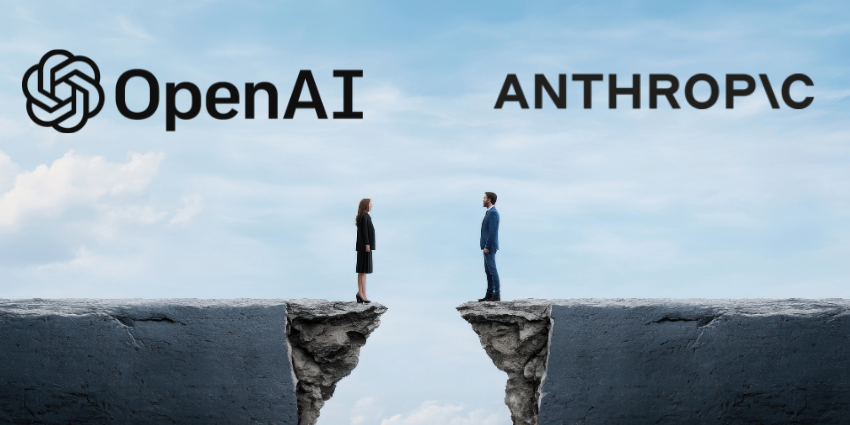
OpenAI vs. Anthropic: Tensions Rise Over AI Advertising
In a growing rivalry between two leading artificial intelligence developers, OpenAI CEO Sam Altman has publicly criticized Anthropic for its recent advertising campaign promoting its Claude platform. The series of four commercials, including one scheduled to air during Super Bowl LX, portray OpenAI and other competitors as compromising user privacy by using personal data for advertising. Altman labeled the campaign as “misleading” and accused Anthropic of employing “dishonest” tactics to criticize features OpenAI has yet to implement.
Altman took to X (formerly Twitter) to express his frustration, stating, “Our most important principle for ads says that we won’t do exactly this; we would obviously never run ads in the way Anthropic depicts them.” He added, “It’s on brand for Anthropic doublespeak to use a deceptive ad to critique theoretical deceptive ads that aren’t real.”
Inside Anthropic’s Claude Campaign
The controversial commercials feature human-like AI assistants asking users for personal information, only to then pitch products based on that data. Each ad ends with the tagline: “Ads are coming to AI. But not to Claude.” The titles of the ads—such as “Deception” and “Betrayal”—underscore the campaign’s message about the dangers of monetizing AI interactions through advertising.
Anthropic clarified that the campaign was designed to emphasize its commitment to keeping Claude ad-free. Company representatives stated that ad-driven AI platforms risk compromising user trust and could influence the behavior of AI in unpredictable ways. According to Anthropic, Claude is built for deep work, complex problem-solving, and personal reflection, and as such, should remain commercially neutral.
Contrasting Philosophies: OpenAI’s Codex and Monetization Strategy
The ad campaign coincided with OpenAI’s launch of Codex, a new application and coding tool designed to empower developers through a centralized hub. In his online post, Altman highlighted the success of Codex, noting that it had already seen over 500,000 downloads since its release just days earlier. “This time belongs to the builders,” he said, “not the people who want to control them.”
Altman contrasted OpenAI’s approach with Anthropic’s decision to limit access to its own coding tools. He emphasized OpenAI’s commitment to providing broad access across various budget levels, suggesting that monetization through ads can help make AI more affordable and accessible worldwide.
Anthropic’s Defense: Privacy, Trust, and Revenue Models
In response to the controversy, Anthropic released a statement reaffirming its ad-free stance. The company emphasized that advertising could interfere with the quality and objectivity of AI-generated responses. Claude, they said, is intended to support user-initiated commerce and integrations—not serve the interests of third-party advertisers.
Anthropic also clarified that its revenue is derived from business contracts and paid subscription plans, not from selling user attention. This model, they argue, helps preserve the integrity and focus of the AI experience.
OpenAI’s Advertising Plans: Balancing Access and User Experience
OpenAI’s decision to include advertising in its AI products has sparked debate. During a speech at Harvard University in 2024, Altman had described ads as a “last resort.” Two years later, OpenAI has confirmed it will begin incorporating ads into ChatGPT, while ensuring they are clearly labeled and absent from paid versions of the platform.
Altman defended the move by highlighting the importance of accessibility. “More Texans use ChatGPT for free than total people use Claude in the US,” he noted. “If you want to pay for ChatGPT Plus or Pro, we don’t show you ads.”
Altman argued that introducing ads allows OpenAI to offer free access to a wider audience, bridging the digital divide. “Anthropic serves an expensive product to rich people,” he said. “We are glad they do that and we are doing that too, but we also feel strongly that we need to bring AI to billions of people who can’t pay for subscriptions.”
What This Means for the Future of AI Platforms
The dispute highlights a fundamental divide in strategy between the two AI giants. While Anthropic emphasizes trust, privacy, and a premium user experience, OpenAI is focused on scalability, affordability, and democratizing access. Each approach has its merits and challenges, and users will likely choose platforms that best align with their values and needs.
As AI becomes increasingly integrated into daily life, the debate over monetization models and ethical design will only grow more complex. For now, the industry watches closely as OpenAI and Anthropic carve distinct paths toward the future of artificial intelligence.
This article is inspired by content from Original Source. It has been rephrased for originality. Images are credited to the original source.