

Frida Baby Under Fire for Controversial Marketing
Popular American baby care brand Fridababy is currently experiencing intense public scrutiny after resurfaced marketing content featuring sexual innuendos sparked outrage across social media platforms. Many users have expressed concern over what they describe as inappropriate and tasteless advertising tactics for products designed for infants.
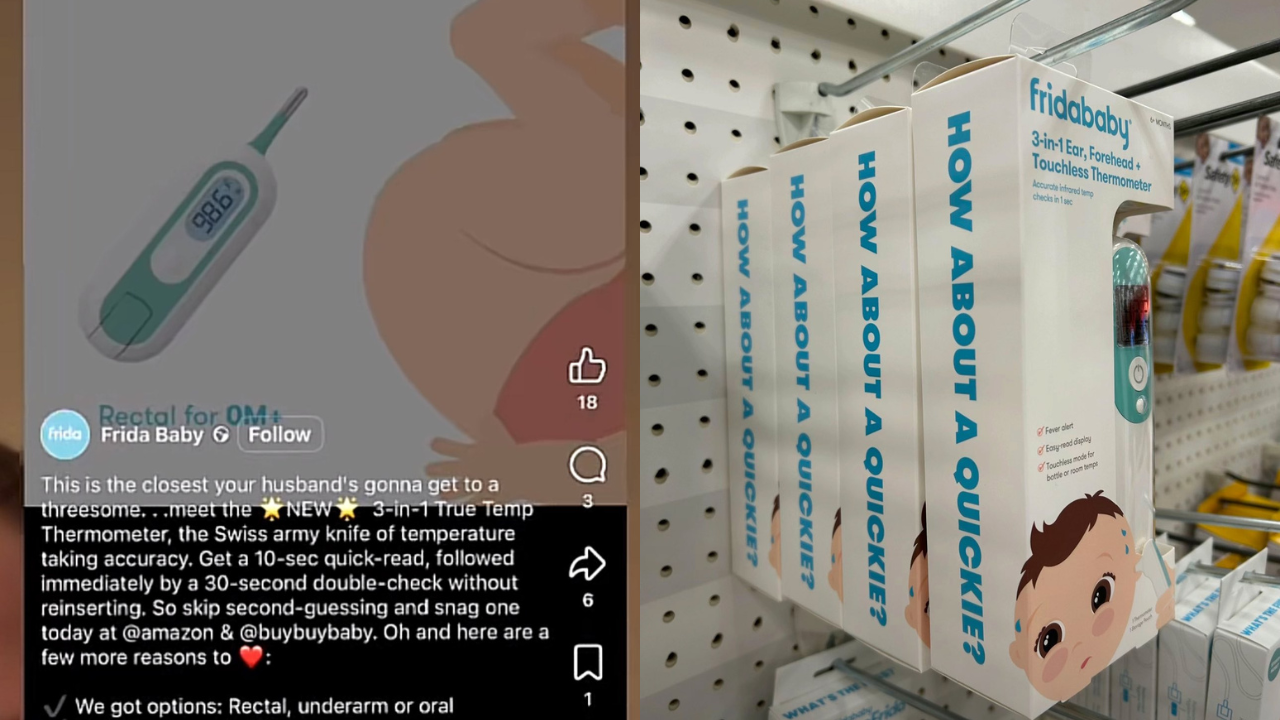
The controversy initially erupted on TikTok and rapidly spread to platforms like X (formerly Twitter), where users began sharing screenshots of Fridababy’s past product packaging and Instagram captions. These materials contained suggestive phrases such as “I get turned on quickly” and “How about a quickie,” prompting widespread backlash and calls to boycott the brand.
Social Media Reacts to Resurfaced Content
Outraged consumers have highlighted various examples of Fridababy’s questionable advertising. One image from a promotional campaign for the 3-in-1 True Temp thermometer showed a baby’s bare bottom next to the caption: “This is the closest your husband’s gonna get to a threesome.” Another product, the 3-in-1 Ear, Forehead + Touchless Thermometer, displayed the phrase “How about a quickie?” on its packaging.
Additional reports include instruction manuals using phrases like “I get turned on easily” in reference to a humidifier. Another product box read, “I’m a [power] sucker,” though it remains unclear which item it pertained to. Social media users were quick to condemn these marketing decisions. One X user wrote, “Sexual jokes to market baby products is actually sick and twisted @fridababy this is absolutely appalling and disgusting.” The post has gathered over 89,000 likes and 4 million views.
Company Team Page and Comments Disappear
As the backlash grew, internet users began to investigate the company further. They identified several team members from Fridababy’s website, including Brian Byrd (Director of Packaging), Adam Gagliardo (VP of Marketing Strategy), and Aaron Camello (Package Design Production Manager). However, within hours, the team page was reportedly taken down. Additionally, users alleged that Fridababy was deleting negative comments on its Instagram posts, a move that only further fueled criticism.
Older Campaigns Also Criticized
Past social media posts from Fridababy have also come under fire. A now-deleted April 2020 post featured a baby with nasal discharge and the caption: “What happens when you pull out too early #nosefrida #dontmove.” More recently, a breastfeeding-centered Instagram post included slides with provocative text like: “Boobs, everyone loves to see them,” and “flash them for beads, shake them on the dance floor, flaunt them on a billboard. No complaints.” The campaign aimed to normalize breastfeeding but was criticized for its tone and execution.
In the comments section, users slammed the brand for allegedly sexualizing motherhood. One person questioned, “Hey so why do you sexualize your products???” Another added, “I’m all for free feeding, but showing videos of women shaking their naked boobs on Instagram isn’t it.”
Boycott Calls and Consumer Response
The fallout has been swift and pronounced. Numerous users have pledged to return Fridababy products, remove the brand from their baby registries, and support alternative companies. The controversy has also sparked broader discussions about marketing ethics, especially in industries that cater to parents and children.
Many believe that while humor can be an effective marketing tool, Fridababy’s approach crossed a line. “There’s a time and place for adult humor,” one parent commented online. “But using it to sell baby products comes off as tone-deaf and irresponsible.”
Fridababy’s Origins and Growth
Fridababy was founded in 2014 by Chelsea Hirschhorn, inspired by her own postpartum experience and early days of motherhood. After discovering the Swedish-designed nasal aspirator NoseFrida in 2013, Hirschhorn identified a gap in the American market and started developing and licensing innovative baby care products tailored to U.S. consumers.
Over the years, the brand has gained a loyal customer base for products like the NoseFrida, Windi gas passer, and various postpartum recovery items. However, this latest backlash threatens to tarnish the company’s reputation and could impact future sales.
As of now, Fridababy has not issued a formal statement addressing the controversy. Whether the brand chooses to apologize, clarify its marketing strategy, or take corrective action remains to be seen. What is clear, however, is that many consumers are demanding greater accountability and sensitivity when it comes to how baby products are marketed.
This article is inspired by content from Original Source. It has been rephrased for originality. Images are credited to the original source.