

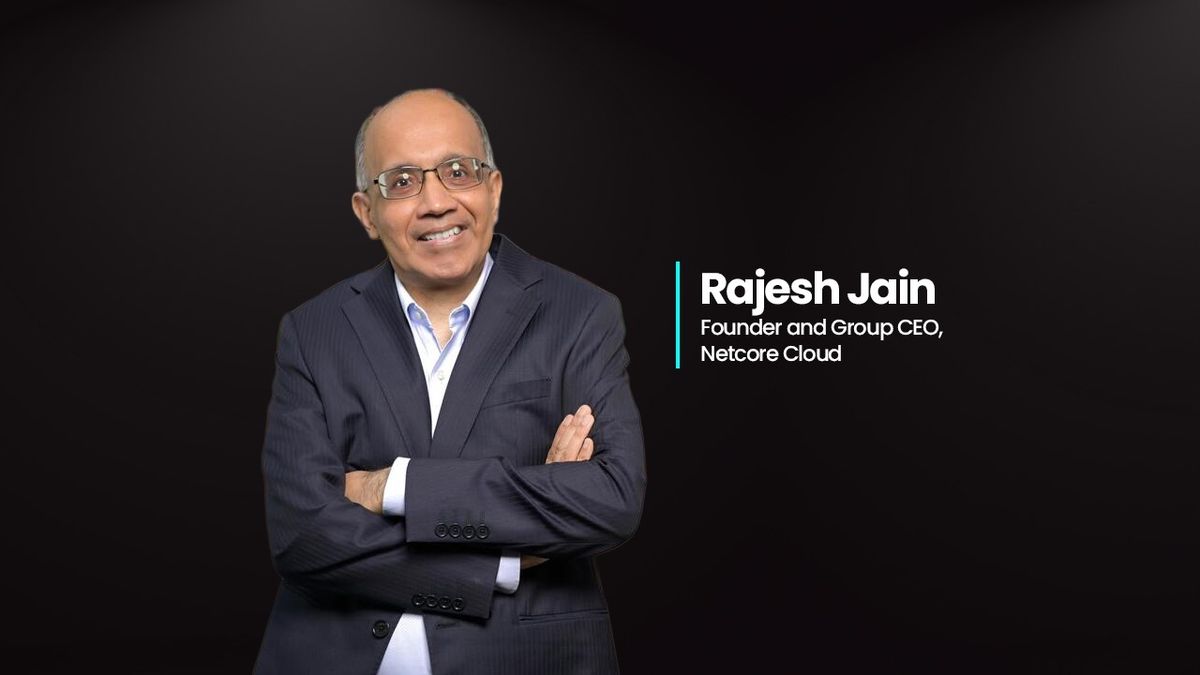
Rajesh Jain Unveils Vision to Transform Marketing Efficiency
Rajesh Jain, Founder and Group CEO of Netcore Cloud, is on a mission to revolutionize digital marketing by drastically reducing ad waste. Speaking about the inefficiencies plaguing modern advertising, Jain emphasized that up to 70% of marketing budgets are lost to reacquiring the same customers who once engaged but drifted away. He estimates global ad waste to be between $500 to $700 billion annually.
Jain aims to change this dynamic by 2027, leveraging a new approach called agentic marketing. This method combines advanced AI agents with marketing automation to increase personalization, effectiveness, and profitability. The goal is to transform marketing from a cost center into a revenue-generating engine.
Agentic Marketing: A Shift from Automation to Autonomy
While traditional marketing automation has streamlined execution, it falls short at delivering relevance at scale. Most marketers rely on broad segmentation, which leads to generic messages that fail to engage. Jain believes agentic marketing—powered by autonomous AI agents—can bridge this gap.
“Agentic marketing introduces decision-making capabilities into marketing operations,” Jain explains. “It’s no longer about simple automation. These AI agents can independently decide what message to send, to whom, through which channel, and at what time.”
Netcore’s partnership with Google Cloud brings together robust infrastructure and AI with deep behavioral insights. Google contributes tools like BigQuery, Vertex AI, and foundational models, while Netcore provides customer segmentation, propensity scoring, and churn prediction models.
Solving the Invisible Problem in Customer Retention
Jain classifies customers into four categories under the BRTN framework: Best (loyal), Rest (disengaging), Test (trial users), and Next (new leads). According to Jain, brands often focus on Best and Next, ignoring the Rest segment, which represents a significant missed opportunity.
“Customers don’t leave because they dislike a product—they leave because of irrelevant communication,” he notes. This oversight leads to reacquisition efforts that drain marketing budgets. With agentic marketing, brands can shift from managing 10 segments to handling 10,000 micro-segments, thanks to AI-generated content tailored for each customer profile.
Four-Layered Martech Stack for Personalized Engagement
The system introduced by Netcore operates through four integrated layers:
- Data Layer: Aggregates data from websites, apps, CRMs, and platforms like Salesforce.
- Decisioning Layer: Uses AI models to determine personalized content and channels.
- Agent Layer: Includes specialized agents like Shopping Assistants and Insights Agents, coordinated by a Co-Marketer Agent.
- Learning Layer: Tracks performance and feeds insights back into the system for optimization.
Netcore demonstrated this system with the Crocs brand, showing how dormant customers and interested buyers could receive distinct creatives, personalized messages, and timely communications through preferred channels like WhatsApp, email, or app notifications.
Early trials have shown a 25–40% increase in CRM-generated revenue, especially in fast-moving sectors like e-commerce. In longer sales cycles, such as insurance or automotive, the focus shifts to nurturing and long-term engagement.
NeoMails: Redefining Email Marketing
To engage the “invisible middle” of customers, Netcore has launched NeoMails—dynamic, interactive emails that evolve in real time. These can include personalized quizzes, embedded product recommendations, live offers, and even ads from non-competing brands. Users can make purchases or share preferences directly within the email interface.
NeoMails also integrate “atomic rewards”, micro-incentives that accumulate across brands. This aligns with research suggesting that attention precedes transaction, a concept emphasized by marketing expert Byron Sharp in his book How Brands Grow.
“Email still delivers unmatched ROI,” Jain asserts, citing conversion rates up to 63 times higher than other channels for engaged users.
Outcome-Based Pricing and the Progency Model
Netcore is also reshaping the business model for marketing services. Its new Progency model—short for Product + Agents + Agency—moves from fixed pricing to outcome-based compensation. Instead of charging per user or message, Netcore aligns its pricing with client revenue outcomes.
In this model, both Netcore and client teams share in the “alpha,” or the revenue generated beyond projected targets. This approach is tailored to different sectors: e-commerce brands focus on repeat purchases and CRM revenue, while financial services prioritize lead quality and engagement.
“Our mission is to help brands move from 10% to 30-40% repeat purchases,” Jain says. “We’re redefining success based on revenue and retention, not just clicks.”
Empowering CMOs as Chief Profit Officers
Jain envisions a future where Chief Marketing Officers evolve into Chief Profit Officers. This transformation requires three key skills: understanding AI’s role in customer engagement, financial literacy to manage profit and loss, and an entrepreneurial mindset to solve complex problems.
He also sees this as a turning point for the agency ecosystem. With tech giants offering low-cost creative tools, traditional agencies must reinvent themselves or risk becoming obsolete. “Agencies have the creative and domain expertise,” Jain adds, “but they must integrate technology to stay relevant.”
To navigate this change, Jain advocates for pre-skilling and retraining the workforce, helping marketers and agencies adapt to AI-driven tools and strategies. Those who move early will gain a competitive edge, much like early adopters of the internet.
“If by 2027 we can reduce ad waste to near zero, we can reinvest that capital into innovation, customer experience, and value creation. That’s the true measure of success,” Jain concludes.
This article is inspired by content from Original Source. It has been rephrased for originality. Images are credited to the original source.