

Marketing Evolution in Saudi Arabia
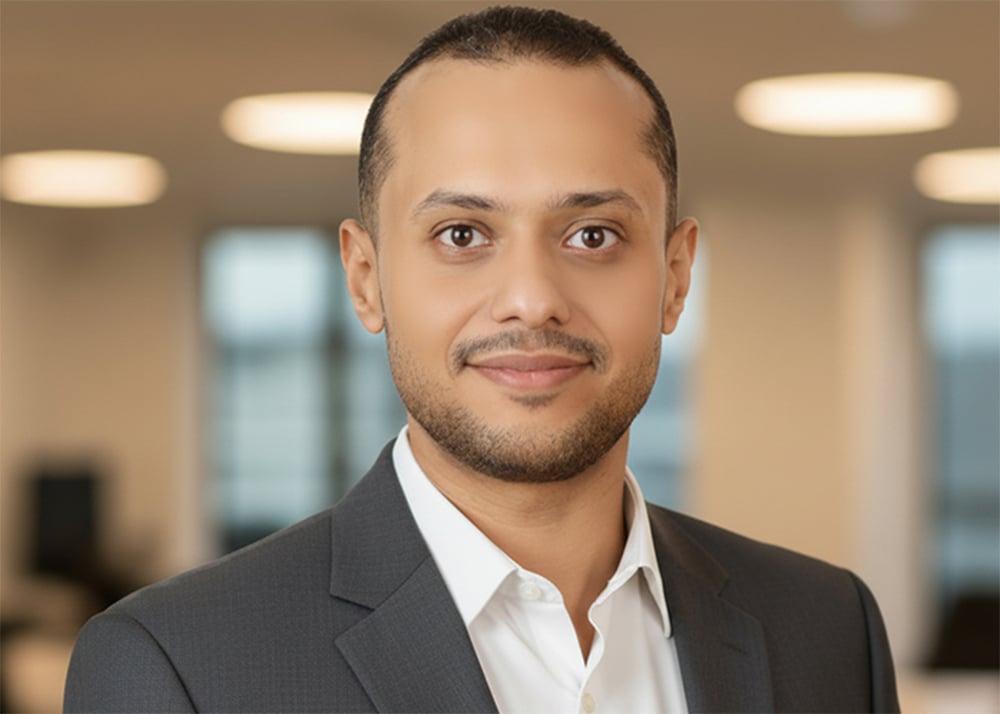
As Saudi Arabia steps into 2026, the marketing and advertising landscape continues to evolve, shaped by a combination of budgetary discipline, changing project types, and talent shortages. Ahmed Ghazi, Marketing Consultant at Thabet Investment Company, highlights how these factors are redefining industry expectations and operational dynamics.
2025: A Year of Budget Reset and Strategic Spending
In 2025, the Saudi marketing and advertising sector saw continued growth, albeit at a more measured pace. With agency revenues estimated in the low-to-mid $2 billion range and annual growth around 5 to 6 percent, the market remained healthy but far from the explosive expansion seen in earlier Vision 2030 years.
Government bodies and major corporations remained the top spenders, yet adopted stricter internal controls. Ministries aligned budgets with transformation KPIs and public outcomes, while private firms demanded detailed ROI tracking, particularly in banking, telecom, entertainment, and tourism sectors. Marketing teams had to justify their budgets through data and measurable impact rather than creative ambition alone.
Project Types and Media Usage in 2025
Project scale diverged significantly in 2025. While fewer large-scale, reputation-focused campaigns were launched, there was a notable increase in mid-size, performance-driven initiatives. Additionally, always-on digital work became more prevalent. Big corporations still drove the bulk of spending, redirecting focus toward digital content, analytics, and operational retainers over one-off campaigns.
Small and medium enterprises (SMEs), meanwhile, embraced agency support for social media management, performance marketing, and e-commerce functions. This led to a surge in smaller briefs—social content, tactical activations, and influencer collaborations—that demanded agility but generated lower average project revenue. Digital formats such as social media, search, programmatic advertising, and online video dominated spending, while traditional media found selective use during national events and religious seasons.
2026: A Shift Toward Disciplined, Performance-Driven Advertising
Between 2021 and 2024, Vision 2030’s momentum encouraged broad awareness campaigns. However, by 2025, rising media costs and economic uncertainty prompted a strategic pivot. The focus shifted toward campaign effectiveness, cost negotiation, and return optimization.
This shift ushered in new accountability measures for both agencies and in-house teams. Contracts increasingly tied compensation to measurable outcomes such as conversions and behavioral changes, rather than reach and impressions. Government procurement rules tightened, increasing scrutiny on content quality, brand safety, and cultural relevance. This reduced the viability of scatter-shot advertising and pushed for precision-focused, insight-led campaigns.
Forecasts and Priorities for 2026
As 2026 unfolds, the Saudi marketing sector is expected to experience steady growth, buoyed by digital transformation, a booming tourism sector, and rising SME activity. Analysts project a continued annual growth rate of 5 to 6 percent, with SMEs alone anticipated to contribute an additional $1 billion in annual media spending by the early 2030s.
Three defining themes are shaping early 2026:
- Stricter budget oversight: Major players are maintaining or slightly increasing budgets, accompanied by more rigorous tendering and a demand for enhanced analytics and reporting.
- Specialized capabilities: Skills in social media, influencer marketing, mar-tech integration, data analytics, and sector-specific expertise are more valued than generic creative services.
- Performance accountability: Agencies that can deliver integrated, compliant, and results-oriented work—whether for large projects or continuous digital efforts—are gaining market favor.
Talent Shortage and Rising Costs
One of the most pressing challenges remains the shortage of skilled professionals. Across 2025 and into 2026, marketing and advertising firms in Saudi Arabia face a significant talent crunch, particularly in mar-tech, data analytics, and performance marketing. This is especially evident in Riyadh and other key economic hubs where public and private sectors compete for top talent.
To attract and retain skilled workers, companies are offering wage premiums, bonuses, and other incentives. This has driven up operational costs across the board. Highly experienced strategists and technologists command premium salaries, while even junior roles in content support, community management, and production are in high demand to support always-on campaigns.
The cumulative effect is a surge in total payroll costs, even when individual salary levels remain moderate. This talent inflation poses a significant challenge for firms trying to balance effectiveness with efficiency.
Strategic Takeaways for 2026 and Beyond
For marketing leaders, the key to success in 2026 lies not in extravagant spending but in focused capability development, executional precision, and demonstrable impact. The industry is moving away from being impressed by scale alone and is increasingly rewarding data-backed, performance-oriented strategies.
As the Saudi market matures, companies must adapt to a more disciplined, results-driven environment. Agencies and in-house teams alike must prioritize specialisation, compliance, and scalability to thrive in an increasingly competitive and scrutinized landscape.
This article is inspired by content from Original Source. It has been rephrased for originality. Images are credited to the original source.