

Navigating the New Epoch of Digital Marketing
In today’s rapidly changing landscape, digital marketing is entering a pivotal era. Marc Pritchard, Chief Brand Officer at Procter & Gamble, shares insights into how brands must adapt to media fragmentation, the rise of artificial intelligence, and the shift toward digital commerce. As one of the world’s largest advertisers, P&G is at the forefront of these sweeping changes, leveraging innovation to remain relevant and effective in reaching consumers.
The Foundation Remains, but Tactics Evolve
Despite technological advances, Pritchard emphasizes that the fundamentals of digital marketing still matter. Understanding your consumer, clarifying your brand’s purpose, and developing creative ideas are as important as ever. What’s changed is the way brands connect with audiences—across TV, social media, short-form, and long-form video—building memory and recognition in a fragmented media landscape.
As commerce and media converge, the growth of AI touches almost every aspect of digital marketing. Marketers face the challenge of measuring cross-media success and building consistent brand assets that resonate across channels. Pritchard stresses the importance of consistency and simplicity in this complex environment.
Unifying Brand, Expert, and Consumer Voices
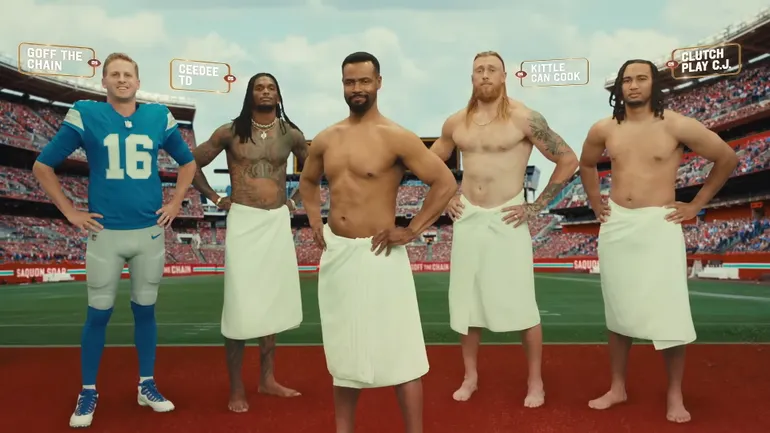
Modern digital marketing strategies rely on amplifying not just the brand’s voice, but also that of experts and consumers. Influencers, creators, and even AI agents are replacing traditional celebrity endorsements, while word-of-mouth is now scalable thanks to digital platforms. Pritchard points to Old Spice’s recent NFL campaign as a prime example—uniting brand mascots, professional athletes, and user-generated content across TV and social media, all while tying messaging directly to retail opportunities.
Creativity remains at the heart of these efforts. P&G continues to collaborate with top creative agencies to build campaigns with both short-form social assets and long-form storytelling, ensuring a consistent experience for consumers. The company’s approach demonstrates how integrating expert and consumer voices with brand messaging drives both awareness and commerce.
Harnessing AI for Marketing Acceleration
Pritchard acknowledges that AI is fundamentally changing digital marketing, but the transition is ongoing. P&G is moving toward more agile, continuous marketing operations—similar to direct-to-consumer brands—by using AI tools to accelerate innovation and execution. For instance, their fabric care division used AI-driven sprints to develop concepts and ads in just weeks, resulting in a tenfold increase in creative assets for the Tide brand and measurable business growth for Gain.
Alongside AI, P&G’s in-house teams play a critical role, handling media buying, advertising, content creation, and engagement with key opinion leaders. This structure enables faster decision-making and greater integration with retail partners, further enhancing digital marketing effectiveness.
Building Trust and Navigating AI Anxiety
While AI opens exciting possibilities, Pritchard cautions that its use must remain grounded in marketing fundamentals. Brands must avoid misleading consumers with AI-generated content and instead focus on responsible, transparent practices. He likens AI to previous innovations like animation and CGI—tools that improve marketing when used authentically.
P&G also invests heavily in understanding how to communicate effectively with large language models and chatbots, recognizing their growing importance in brand-consumer interactions.
Solving the Measurement Challenge
Cross-media measurement remains a persistent challenge for digital marketing leaders. As media channels proliferate, marketers need unified systems for tracking campaign results. The introduction of Aquila, an ANA-developed measurement solution, promises to simplify this process by combining data from platforms like Meta, Google, Amazon, and TikTok with linear and streaming TV insights. Pritchard sees this as a major step forward, but emphasizes the continued need for accurate retail sales signals and closed-loop attribution to truly measure impact.
Staying Agile in a Fast-Moving Industry
Pritchard’s advice for marketers is clear: treat marketing as an ongoing sprint, not a marathon. The rapid pace of technological change requires brands to continuously re-evaluate strategies, upskill teams, and practice with new tools. By staying nimble and embracing innovations in digital marketing, brands can keep pace with evolving consumer expectations and industry standards.
Ultimately, the future of marketing belongs to those who combine enduring fundamentals with the agility to leverage the latest digital innovations.
This article is inspired by content from Original Source. It has been rephrased for originality. Images are credited to the original source.