

U.S. Bank Embraces Hollywood for Major Brand Integration
U.S. Bank is taking a bold step into entertainment marketing with its prominent partnership in Netflix’s upcoming film, Happy Gilmore 2. The sequel to the beloved 1996 comedy starring Adam Sandler is set to premiere on July 25, and the bank is capitalizing on the film’s multigenerational appeal to connect with a wide audience.
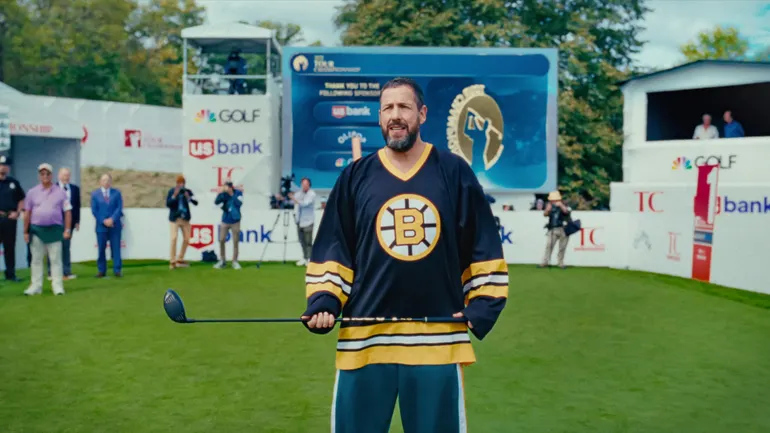
In this new venture, U.S. Bank is integrated directly into the movie as a top sponsor of the fictional “Tour Championship,” prominently featuring its logo on the caddy bib of the titular character. This marks a significant departure from the traditionally conservative tone financial institutions usually adopt in their branding efforts.
A Playful Spin on Banking
As part of the campaign, U.S. Bank has launched a 30-second commercial titled “Happy As Usual”. The ad humorously places legendary golf commentator Verne Lundquist inside a U.S. Bank branch, where he narrates everyday customer banking activities as if they were championship golf plays. It even features professional golfer and U.S. Bank brand ambassador Collin Morikawa depositing an oversized million-dollar check.
This inventive ad was developed in collaboration with Netflix, Adam Sandler’s Happy Madison production company, and creative agency Barkley. Directed by Frank Coraci—well-known for his work with Sandler on films like The Waterboy and The Wedding Singer—the spot delivers a family-friendly comedic tone that aligns with the movie while showcasing U.S. Bank’s lighter side.
Strategic Marketing Beyond the Film
U.S. Bank’s campaign doesn’t stop at the commercial. The financial institution is rolling out a nationwide marketing initiative that spans traditional and digital platforms. Its media buy includes placement across linear networks such as NBC and ESPN, as well as digital channels ranging from Meta and YouTube to Snapchat and IMDb. Importantly, the campaign also runs on Netflix’s ad-supported plan, placing the brand within the very platform premiering the film.
Chief Marketing Officer Michael Lacorazza, who joined U.S. Bank less than two years ago, noted that this collaboration represents a significant shift in the bank’s go-to-market approach. “One of the areas that the team has been leaning into is finding these moments of culture that we can invest and lean into,” Lacorazza explained. “We’re typically more sober — we’re talking about managing people’s money and giving advice — but given the context of the film, it was a great opportunity to have some fun with it.”
Reaching New Demographics
A central objective of this partnership is to connect with younger and midlife affluent audiences—groups that represent both the current and future core of U.S. Bank’s customer base. Lacorazza emphasized the multigenerational appeal of Happy Gilmore 2 as a strategic advantage. “This investment is designed to lean in more so to younger audiences as the future and the life blood of our franchise going forward,” he said. “But we get the benefit of bringing everybody along for the ride.”
Social media content supporting the campaign includes short videos featuring Collin Morikawa, further tying the financial brand to the sport and its youthful, aspirational audience. By aligning with a nostalgic yet contemporary piece of pop culture, U.S. Bank is hoping to make finance feel more approachable and engaging.
Netflix’s Rising Influence in Advertising
The timing of U.S. Bank’s campaign aligns with Netflix’s growing clout in the streaming and advertising landscape. According to Nielsen’s latest “The Gauge” report, Netflix saw a 13.5% increase in viewing during June, now accounting for 8.3% of all television consumption. Integrating branded content into this platform offers brands like U.S. Bank a rare opportunity to appear directly within the cultural content garnering massive viewership.
Other brands are also joining the fun. Golf equipment maker Callaway and restaurant giant Subway are among the film’s additional sponsors. Subway is even releasing a limited-edition “Happy Gilmore Meal,” capitalizing on the film’s buzz ahead of its premiere.
Pushing Creative Boundaries
For U.S. Bank, this project represents more than a branding opportunity—it’s a chance to reimagine how financial services can engage with consumers in meaningful, culturally relevant ways. “We stretch the boundaries of the use of humor for our brand,” Lacorazza said. “It’s not something we’ve traditionally done, but moments like this allow us to showcase the human side of banking.”
This campaign may signal a trend among financial institutions to explore more engaging and less conventional marketing strategies. As brands increasingly seek to embed themselves in lifestyle and entertainment experiences, U.S. Bank’s venture into film partnership could serve as a blueprint for others.
This article is inspired by content from Original Source. It has been rephrased for originality. Images are credited to the original source.