

Carl’s Jr. Returns to Risqué Roots with AI-Powered Campaign
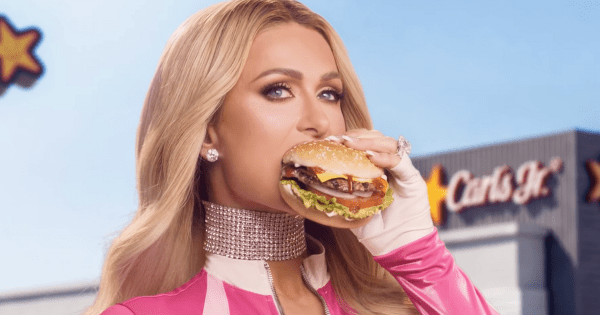
In a bold revival of its provocative marketing strategy, fast-food chain Carl’s Jr. has reimagined its infamous early-2000s campaign featuring Paris Hilton with a modern AI-powered twist. The reboot, titled “Starwash,” is a nostalgic yet tech-savvy nod to the original 2005 ad that saw Hilton washing a Bentley in a bikini while devouring a Carl’s Jr. burger.
After pivoting away from its signature “bikinis and burgers” motif in 2017 to focus on its all-natural, grass-fed beef, Carl’s Jr. is once again embracing sex appeal to grab attention. The shift back began in early 2025 with a Super Bowl-adjacent campaign featuring influencer Alix Earle. That campaign, which showcased Earle enjoying a hangover burger in a star-shaped bra and denim skirt, boosted the brand’s Instagram following by 91% and generated 2.5 million TikTok views within 48 hours, according to analytics firm Metricool.
Paris Hilton and AI Reimagine a Classic
The latest campaign revives the spirit of the original “I Love Paris” commercial, this time with a futuristic, AI-driven twist. “Starwash” opens with two men eating burgers outside a Carl’s Jr. when an accidental ketchup spill makes a mess of their car. Their solution lies across the street at “Paris’ Famous Starwash,” a retro-futuristic car wash operated by AI-powered Hilton clones. Once inside, their beat-up vehicle is transformed into a gleaming Bentley—an unmistakable reference to the original ad.
Paris Hilton herself was involved in filming parts of the commercial, lending authenticity and star power to the campaign. The brand collaborated with creative studio Native Foreign to bring this Y2K-meets-AI vision to life.
“AI let us do something magical: we went back in time to one of advertising’s most iconic moments, then pulled the real Paris Hilton through it into today,” said Kara Gasbarro, VP of Creative and Brand Strategy at CKE Restaurants, Carl’s Jr.’s parent company. “It’s surreal and fun and expands creative possibilities. But here’s what matters: when you peel back the fun AI, you’re left with real Paris, and a real burger that tastes as incredible today as it did in 2004.”
Nostalgia Marketing Drives New Engagement
Carl’s Jr. is one of many brands leaning on nostalgia to spark consumer engagement and increase sales. Others include Dunkin’, Gap, and T-Mobile, all of which have launched campaigns in recent years that harken back to earlier eras. Though CKE Restaurants is privately owned and doesn’t publicly disclose revenue, career platform Zippia estimates the company generated $1.3 billion in revenue across 3,800 locations in 2024.
By revisiting its past with a contemporary spin, Carl’s Jr. taps into a collective cultural memory while introducing cutting-edge technology into its campaigns. The result is a blend of retro charm and futuristic innovation aimed at reigniting interest in the brand.
The Return of the Male Gaze in Advertising
The resurgence of sexually suggestive advertising is not unique to Carl’s Jr. Over the past year, multiple U.S. brands have reintroduced marketing strategies that cater to the male gaze—a tactic that was prevalent until the mid-2000s. This trend has sparked debate over the ethics and effectiveness of such approaches in today’s cultural climate.
In June 2025, personal care brand Dr. Squatch launched a controversial campaign offering consumers a chance to win soap made from actress Sydney Sweeney’s bathwater. The accompanying video featured Sweeney teasing “dirty little boys” with a product described as smelling like “morning wood.” Dr. Squatch’s VP of Global Marketing, John Ludeke, defended the campaign, stating, “Women also love Sydney Sweeney. People appreciate a woman who is in power, who’s in control, who’s able to have fun and not take themselves too seriously.”
Later that year, American Eagle rolled out its “Sydney Sweeney Has Great Jeans” campaign. Critics took issue with the ads’ focus on Sweeney’s body, with visuals that zoomed in on her chest and buttocks and depicted her playing to an unseen male viewer behind the camera.
Meanwhile, David Protein released a suggestive campaign starring Julia Fox, whose character made a series of euphemism-rich confessions to a priest. The ad drew backlash for promoting what some critics called a “male fantasy masquerading as female empowerment.”
Looking Ahead
As brands continue to explore the intersection of nostalgia, AI, and provocative imagery, the advertising landscape is once again shifting. Carl’s Jr.’s latest campaign is a reflection of this evolving trend—a calculated blend of past and future, sex appeal and technology, designed to captivate a new generation while honoring iconic moments from the past.
This article is inspired by content from Original Source. It has been rephrased for originality. Images are credited to the original source.